

How a Simple Idea Becomes a Real Product
A
By Astrid Jensen on July 2, 2026

Every product begins with an idea.
Sometimes that idea arrives during a conversation with friends, while solving a problem at work, or after noticing something frustrating in everyday life. It might seem surprisingly simple at first—a reusable water bottle that keeps drinks colder, an app that organizes family schedules, or a kitchen gadget that makes cooking easier.
The interesting part is that having the idea is only the beginning. Every successful product people use today, from smartphones and headphones to furniture and software, has gone through a long journey of testing, refining, improving, and adapting before reaching customers.
While every product follows a different path, most successful innovations share the same basic process: identifying a real problem, creating a solution, improving it through feedback, and continuously refining it after launch.
Every great product starts with a problem
People often think successful businesses begin with brilliant ideas. In reality, they usually begin with a problem.
The best products solve something that people already struggle with. Sometimes the problem is obvious, like carrying heavy luggage through an airport. Other times it’s less noticeable, such as wasting time switching between different software tools during the workday.
Instead of asking, “What can I invent?” many successful entrepreneurs ask a different question: “What frustrates people every day?”
Once a genuine problem has been identified, designing a useful solution becomes much easier.
Many of the world’s most successful companies didn’t create entirely new markets—they simply found better ways to solve existing problems.
Turning an idea into a concept
After identifying a problem, the next step is transforming the initial idea into something more concrete.
At this stage, creators begin asking practical questions. Who is this product for? How would people use it? What makes it different from existing alternatives? Is there already a similar solution available?
This is also the point where sketches, notes, diagrams, and simple prototypes often appear. The goal isn’t perfection but exploration. Designers and entrepreneurs experiment with different approaches before deciding which direction has the greatest potential.
Many ideas change dramatically during this stage because the first version rarely turns out to be the best one.
Building the first prototype
Once the concept becomes clearer, it’s time to create a prototype.
A prototype is an early version of the product that allows people to test the basic idea before investing significant time and money into full production. It doesn’t need to look perfect or include every planned feature.
For physical products, a prototype might be created using 3D printing, simple materials, or handmade components. For digital products, it could be a basic app, website, or interactive design that demonstrates the core functionality.
The purpose of a prototype is to answer one important question: Does this actually solve the problem it was designed to solve?
Testing early often reveals improvements that would have been impossible to discover through planning alone.
Feedback shapes better products
One of the biggest mistakes inventors can make is assuming they already know exactly what customers want.
Successful product development depends heavily on feedback.
Early users often notice confusing features, unexpected problems, or opportunities for improvement that designers never considered. Sometimes they even use the product in ways that its creators didn’t anticipate.
Listening carefully to real users allows businesses to improve the product before releasing it to a much larger audience.
Many of today’s most successful products have gone through dozens—or even hundreds—of revisions based on customer feedback.
From prototype to production
Once testing confirms that the product works well, attention shifts toward manufacturing or large-scale development.
For physical products, this may involve selecting materials, finding suppliers, improving durability, reducing production costs, and ensuring consistent quality.
For software, developers focus on performance, security, reliability, and creating an experience that’s easy for customers to understand.
At this stage, many practical decisions become just as important as the original idea. Even an excellent product can struggle if it’s too expensive to produce, difficult to manufacture, or confusing to use.
Innovation isn’t only about creativity—it’s also about execution.
Launching is only the beginning
Many people imagine that launching a product marks the end of the development process.
In reality, it’s often the beginning.
Once customers begin using a product, businesses receive valuable information about how it performs in the real world. Reviews, customer support requests, usage data, and feature suggestions all provide insights that weren’t available during development.
Companies regularly release updates, redesign products, improve packaging, fix problems, and introduce new features based on this ongoing feedback.
The most successful products continue evolving long after their initial release.
Great products continue improving
Very few products become successful because they were perfect from day one.
Most succeed because the people behind them were willing to learn, adapt, and improve continuously.
Whether it’s a smartphone receiving software updates, a coffee machine with a redesigned interface, or a productivity app introducing new features, ongoing improvement is one of the defining characteristics of successful products.
Innovation rarely happens through one brilliant moment. It’s usually the result of hundreds of small improvements made over time.
Every invention starts somewhere
It’s easy to look at globally successful products and assume they were always destined for success.
The reality is much different.
Almost every product began as a rough idea, an early sketch, or a simple conversation about solving a problem. Through experimentation, feedback, persistence, and countless revisions, that idea gradually evolved into something people genuinely wanted to use.
Most ideas never become products because they stop at the thinking stage.
The difference between an idea and an innovation is action.
Every successful product that exists today was once nothing more than a simple thought in someone’s mind. What transformed it into reality wasn’t perfection—it was the willingness to keep testing, improving, and moving forward until the solution truly met people’s needs.


AI
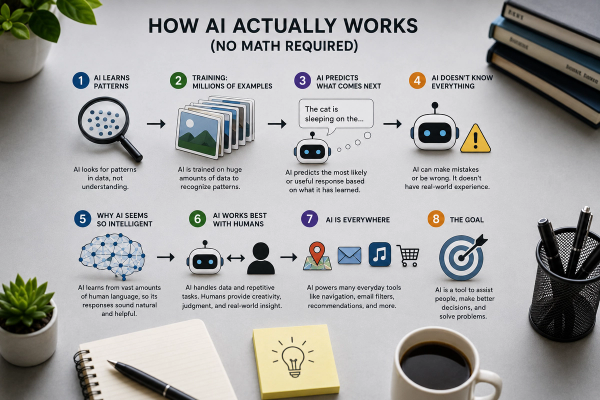
How AI Actually Works (No Math Required)

How to Spot AI-Generated Content Even When It’s Good

The Real Difference Between AI, Machine Learning, and Deep Learning

How to Prompt AI Like a Pro
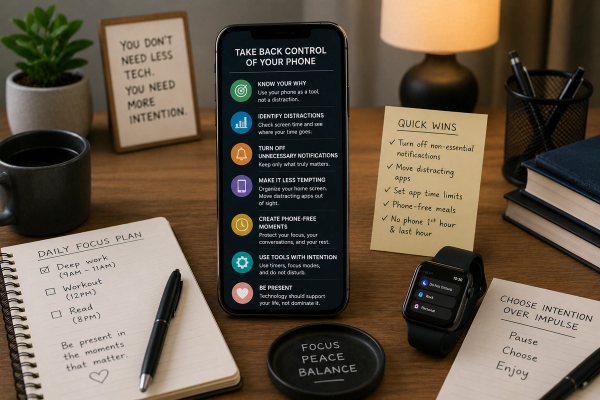







Read More

Why the World Feels Faster Than Ever (And What to Do About It)
Astrid Jensen|
Why Some People Notice More Than Others
Joel Anderson|

Why the Slow Things Are Quietly Winning
Brett Crane|

How to Spend Less Without Feeling Deprived
Joel Anderson|

How to Spend a Sunday Like You Mean It
Brett Crane|
The Inventions That Changed How We Live (And Why)
Karina Leon|