

The Habits of People Who Always Seem Calm
K
By Karina Leon on July 2, 2026
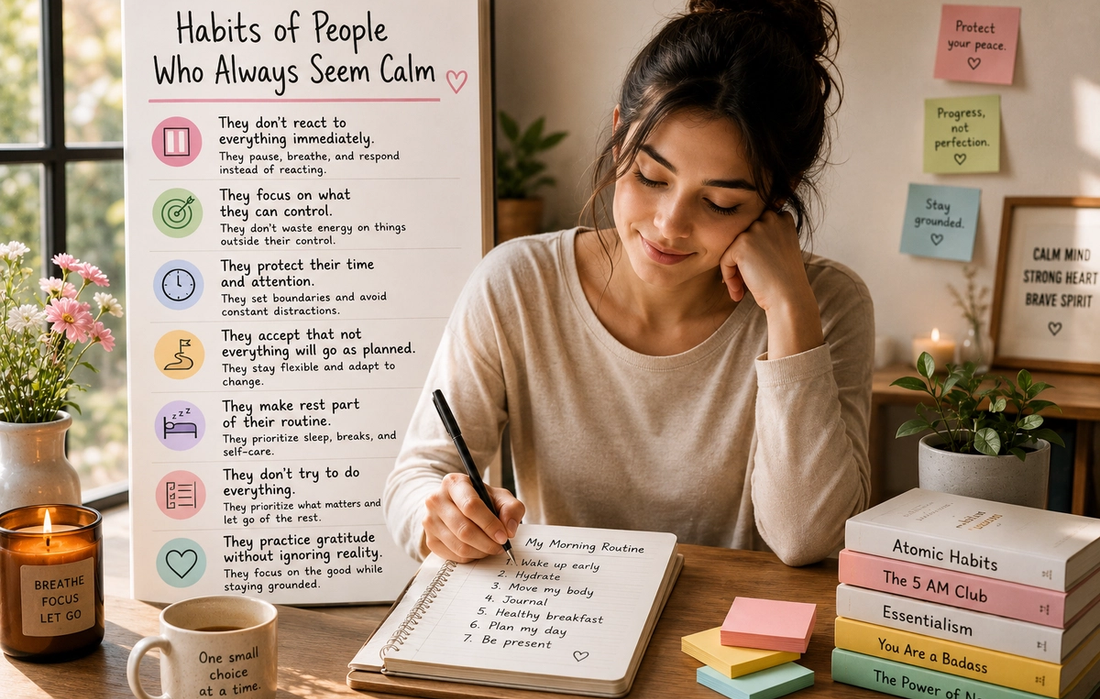
Everyone knows someone who appears calm no matter what life throws at them. They stay composed during stressful meetings, handle unexpected problems without panicking, and rarely seem overwhelmed even when they’re juggling multiple responsibilities. From the outside, it can look as though they simply have a naturally relaxed personality.
The truth is usually more complicated.
Calm people don’t necessarily experience less stress than everyone else. They face deadlines, disappointments, difficult conversations, and uncertainty just like anyone else. The difference is often found in the habits they’ve built over time. Rather than reacting to every challenge immediately, they’ve learned how to manage their attention, emotions, and energy in ways that help them stay grounded.
While no one remains perfectly calm all the time, adopting some of these habits can make everyday stress feel much more manageable.
They don’t react to everything immediately
One of the biggest differences between calm people and constantly overwhelmed people is how they respond to situations.
When something unexpected happens—a critical email, an argument, or a change of plans—many people feel pressure to react instantly. Calm individuals are more likely to pause before responding. That brief moment gives them time to think rather than simply react emotionally.
This doesn’t mean they ignore problems. Instead, they create enough space to respond thoughtfully instead of impulsively. Often, that small pause leads to better decisions and fewer regrets.
Learning to slow down, even for a few seconds, can dramatically change the way you handle stressful situations.
They focus on what they can control
Stress often grows when we spend too much energy worrying about things we can’t influence.
Calm people tend to recognize the difference between what is within their control and what isn’t. They can’t control the weather, other people’s opinions, traffic, or unexpected setbacks, but they can control how they prepare, how they respond, and what they do next.
Rather than becoming consumed by uncertainty, they direct their energy toward actions that actually make a difference. This mindset doesn’t eliminate problems, but it prevents unnecessary worry from taking over.
Focusing on what you can control creates a greater sense of stability, even when life feels unpredictable.
They protect their time and attention
Many people feel constantly busy because their attention is being pulled in dozens of different directions. Notifications, emails, social media, and endless to-do lists make it difficult to focus on one thing at a time.
People who seem calm often create boundaries around their attention. They don’t feel obligated to respond to every message immediately, and they understand that constant interruptions make both work and relaxation more difficult.
They make time for focused work, meaningful conversations, and genuine rest without allowing technology to dominate every moment of the day.
Protecting your attention is one of the simplest ways to reduce mental clutter.
They accept that not everything will go as planned
One of the fastest ways to create unnecessary stress is expecting life to unfold exactly as planned.
Flights get delayed. Meetings run late. Projects change direction. People make mistakes.
Calm individuals understand that setbacks are part of life rather than exceptions to it. Because they expect occasional disruptions, they’re often better prepared to adapt when plans change.
Acceptance doesn’t mean giving up or lowering standards. It simply means recognizing that flexibility is often more useful than frustration.
People who adapt quickly usually recover from setbacks much faster than those who resist every unexpected change.
They make rest part of their routine
Remaining calm isn’t only about handling stressful moments well. It’s also about taking care of yourself before stress begins to build.
People who consistently appear calm often prioritize sleep, regular movement, healthy routines, and moments of genuine rest. They understand that constantly pushing themselves without recovery eventually affects both their mood and their ability to think clearly.
Rest isn’t viewed as something to earn after exhaustion. It’s treated as an essential part of maintaining physical and mental wellbeing.
Even short breaks during the day can help restore focus and reduce feelings of overwhelm.
They don’t try to do everything
Calm people aren’t necessarily more productive because they do more. Often, they’re productive because they choose carefully what deserves their attention.
They understand that saying yes to every request usually means saying no to their own priorities. Instead of trying to accomplish everything, they focus on the tasks that matter most and accept that some things can wait.
This ability to prioritize reduces unnecessary pressure and creates more realistic expectations.
Being busy isn’t always the same as being effective.
They practice gratitude without ignoring reality
People who remain calm aren’t pretending life is perfect.
They experience disappointment, frustration, and difficult days just like everyone else. The difference is that they intentionally notice positive moments alongside the challenges.
Gratitude isn’t about denying problems. It’s about remembering that difficult experiences rarely represent the whole picture.
Taking a few moments to appreciate supportive relationships, good health, personal progress, or simple everyday comforts can provide valuable perspective during stressful periods.
This habit encourages resilience rather than unrealistic optimism.
Calm is built through daily habits
Many people assume calmness is a personality trait you’re either born with or without.
In reality, it’s often the result of repeated daily choices.
Pausing before reacting, focusing on what’s controllable, protecting your attention, accepting uncertainty, prioritizing rest, setting healthy boundaries, and practicing gratitude may seem like small actions individually. Together, however, they shape how you experience stress and respond to life’s challenges.
Like any habit, these behaviors become easier with practice.
A calmer life starts with small choices
Modern life will probably never be completely free of stress. There will always be deadlines, unexpected changes, difficult conversations, and moments of uncertainty. The goal isn’t to eliminate those experiences but to develop healthier ways of responding to them.
People who seem calm aren’t living perfect lives. More often, they’ve learned habits that help them stay steady when life becomes demanding. They understand that calmness isn’t about avoiding problems—it’s about facing them without allowing them to control every thought and emotion.
The encouraging part is that these habits aren’t reserved for a fortunate few. They’re skills that anyone can gradually develop, one small decision at a time. And over time, those decisions create something many people are searching for: a greater sense of balance, resilience, and peace in everyday life.
AI

How AI Actually Works (No Math Required)

How to Spot AI-Generated Content Even When It’s Good

The Real Difference Between AI, Machine Learning, and Deep Learning

How to Prompt AI Like a Pro






Read More

Why the World Feels Faster Than Ever (And What to Do About It)
Astrid Jensen|
Why Some People Notice More Than Others
Joel Anderson|

Why the Slow Things Are Quietly Winning
Brett Crane|
How to Spend Less Without Feeling Deprived
Joel Anderson|

How to Spend a Sunday Like You Mean It
Brett Crane|

The Inventions That Changed How We Live (And Why)
Karina Leon|