

The Quiet Cost of Always Being Online
A
By Astrid Jensen on July 2, 2026
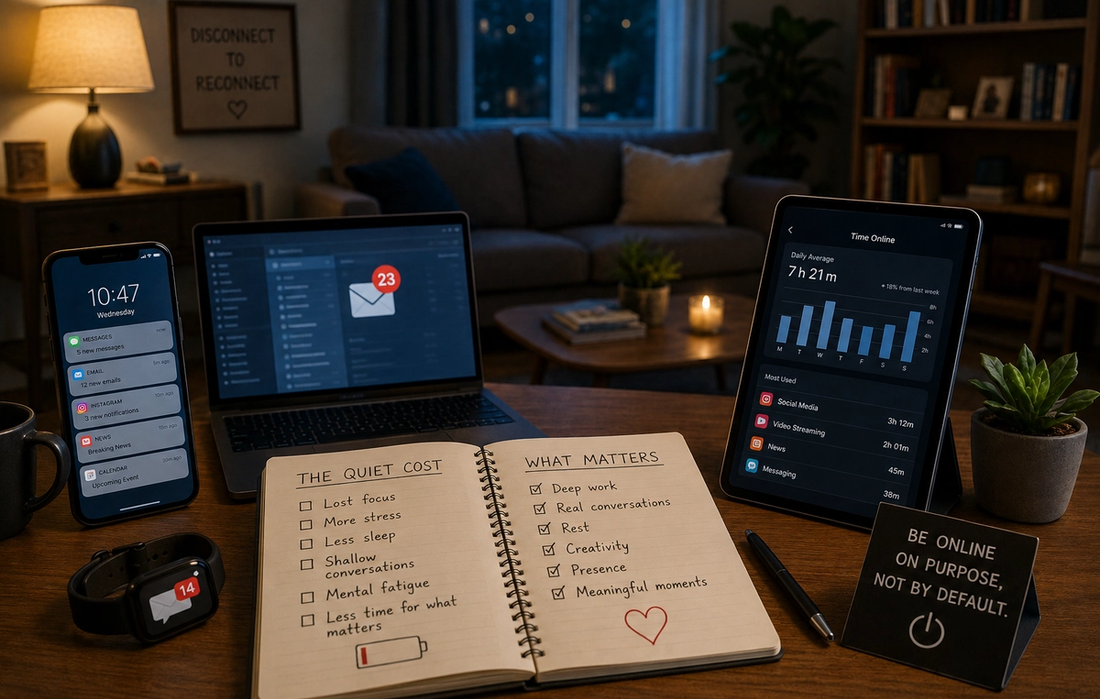
Being connected has never been easier. With a smartphone, laptop, or smartwatch always within reach, we can answer emails, join video meetings, check the news, message friends, shop online, and access almost any piece of information in seconds. Technology has transformed the way we live and work, making everyday tasks faster and more convenient than ever before.
Yet as our digital lives have expanded, so has the amount of time we spend online. For many people, being connected has quietly become the default. We check our phones while waiting in line, scroll through social media before getting out of bed, reply to work messages during dinner, and end the day with one last look at our screens. Because these habits have become so common, it’s easy to overlook their long-term impact.
The cost of always being online isn’t measured only in hours spent looking at a screen. It’s measured in the moments of focus we lose, the conversations we interrupt, and the opportunities for rest and reflection that slowly disappear from our daily lives.
Constant connection comes with constant interruptions
Modern technology has made communication almost effortless. We can reach someone on the other side of the world instantly, receive updates in real time, and stay informed about events as they happen. While these advances have obvious benefits, they also mean we’re rarely free from interruptions.
Notifications arrive throughout the day from messaging apps, social media platforms, shopping websites, calendars, news services, and countless other sources. Even if each interruption lasts only a few seconds, the cumulative effect can be significant. Every time we stop what we’re doing to check a notification, our attention shifts away from the task at hand. It often takes several minutes to fully regain our concentration, making deep, focused work much harder than it needs to be.
Over time, this constant switching can leave us feeling busy without necessarily feeling productive.
We rarely give our minds a chance to rest
Think about the last time you stood in a queue, waited for public transport, or sat quietly with a cup of coffee. Did you simply observe the world around you, or did you instinctively reach for your phone?
Many of us have become so accustomed to filling every spare moment with digital content that silence feels unusual. We scroll through headlines, watch short videos, or reply to messages without even thinking about it. While none of these activities are harmful on their own, they leave very little room for boredom, reflection, or simply letting our minds wander.
Psychologists have long suggested that these quiet moments are valuable. They give our brains an opportunity to process information, solve problems creatively, and recover from constant stimulation. When every pause is immediately filled with more content, those mental breaks become increasingly rare.
Being online doesn’t always mean being present
Technology has made it easier than ever to stay in touch with the people we care about. Families separated by continents can video call each other in seconds, and friendships can continue despite busy schedules and long distances.
At the same time, being digitally connected isn’t always the same as being emotionally present. It’s not unusual to see groups of friends sitting together while everyone looks at their own phone, or families sharing a meal interrupted by repeated notifications. In these moments, we’re physically together but mentally divided.
Meaningful conversations often require something that’s becoming increasingly difficult to protect: undivided attention. Putting a phone aside during a conversation may seem like a small gesture, but it sends a powerful message that the person in front of you matters more than whatever is happening on your screen.
The pressure to always be available
Another hidden cost of constant connectivity is the feeling that we should always be reachable. Emails arrive outside working hours, group chats continue late into the evening, and social media creates the expectation of instant replies.
For many people, the boundaries between work and personal life have become blurred. Instead of truly finishing the workday, they remain partially connected, checking messages “just in case” or responding to notifications long after they’ve left the office.
While occasional flexibility can be helpful, constantly feeling on call can make it difficult to fully relax and recharge. Setting healthy boundaries around technology isn’t about ignoring responsibilities—it’s about recognizing that rest is an important part of being productive and healthy.
Small changes can make a big difference
You don’t need to give up technology to reduce its impact on your daily life. In fact, the most sustainable changes are often the simplest ones.
Turning off non-essential notifications, leaving your phone in another room while you work, keeping devices away from the dinner table, or avoiding screens during the first and last thirty minutes of the day can all make a noticeable difference. These habits create small pockets of uninterrupted time where you can focus, reflect, or simply enjoy the present moment.
The goal isn’t perfection. There will always be days when work demands more attention or when you spend an evening watching your favorite series. The important thing is to make those choices consciously rather than allowing your devices to dictate how you spend your time.
Technology should support your life—not dominate it
Technology is one of the greatest tools ever created. It allows us to learn, create, communicate, and solve problems in ways previous generations could hardly imagine. The issue isn’t that we’re using technology—it’s that we’re often using it without noticing how much of our attention it quietly consumes.
Learning to disconnect occasionally doesn’t mean rejecting the digital world. It means making space for the parts of life that screens can’t replace: meaningful conversations, focused work, quiet reflection, and moments of genuine presence.
In a world where being online has become the norm, choosing when to step away is becoming an increasingly valuable skill. The quiet cost of always being connected is real, but so are the rewards of occasionally putting your phone down and fully engaging with the world in front of you.


AI
How AI Actually Works (No Math Required)

How to Spot AI-Generated Content Even When It’s Good

The Real Difference Between AI, Machine Learning, and Deep Learning

How to Prompt AI Like a Pro







Read More

Why the World Feels Faster Than Ever (And What to Do About It)
Astrid Jensen|
Why Some People Notice More Than Others
Joel Anderson|

Why the Slow Things Are Quietly Winning
Brett Crane|

How to Spend Less Without Feeling Deprived
Joel Anderson|

How to Spend a Sunday Like You Mean It
Brett Crane|

The Inventions That Changed How We Live (And Why)
Karina Leon|