

How to Take Back Control of Your Phone (Without Quitting Tech)
K
By Karina Leon on July 2, 2026
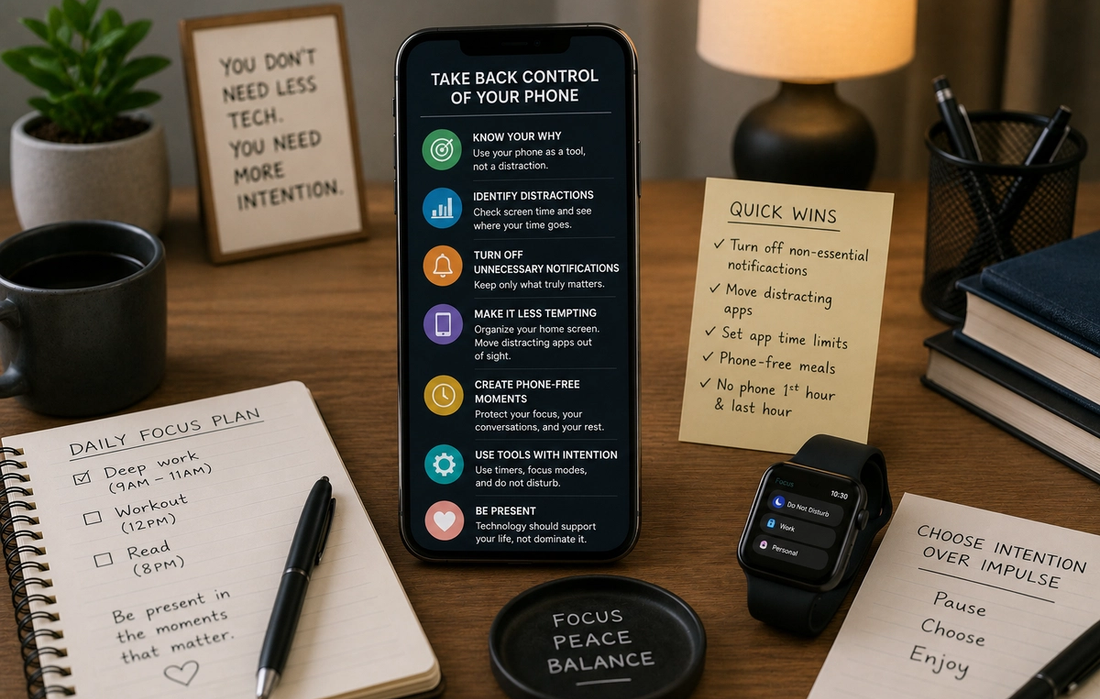
Our phones have become one of the most useful tools we’ve ever owned. They help us navigate unfamiliar cities, stay in touch with family and friends, manage our finances, capture memories, work remotely, and access almost any piece of information within seconds. For most people, giving up their smartphone entirely isn’t realistic—or even desirable.
The problem isn’t that we use our phones. It’s that, for many of us, they’ve quietly gone from being tools we control to devices that constantly compete for our attention. A quick glance at a notification can turn into twenty minutes of scrolling, and checking the weather can somehow end with watching videos you never intended to watch. These habits don’t develop overnight, but over time they can make us feel distracted, less productive, and oddly disconnected from the present moment.
The good news is that you don’t need a digital detox or a flip phone to build a healthier relationship with technology. Small, intentional changes are often enough to put you back in charge.
Understand what your phone is really competing for
It’s easy to think that smartphones steal our time, but what they’re really competing for is our attention. Every notification, vibration, and colorful app icon is designed to encourage interaction. Many apps are built around engagement, meaning their success depends on how often you return and how long you stay.
There’s nothing inherently wrong with this. Businesses naturally want people to use their products. The challenge is that your attention is limited. Every moment spent checking an app is a moment that can’t be spent focusing on work, having a conversation, reading a book, or simply allowing your mind to rest.
The first step toward regaining control isn’t deleting every app—it’s becoming aware of how often you’re picking up your phone without a clear reason.
Identify your biggest digital distractions
Most people don’t use every app equally. If you look at your screen time statistics, you’ll probably notice that a small number of apps account for the majority of your phone use.
Ask yourself a few simple questions. Which apps leave you feeling informed, connected, or productive? Which ones leave you wondering where the last thirty minutes went? Which notifications genuinely require your immediate attention, and which ones simply tempt you to open an app?
This isn’t about judging yourself or deciding that certain apps are “bad.” It’s about understanding your own habits. Once you know where your attention is going, you can make intentional decisions instead of reacting automatically.
Turn off notifications that don’t matter
Notifications are one of the biggest reasons we interrupt ourselves throughout the day. While some alerts are genuinely useful—such as messages from family, calendar reminders, or banking notifications—many exist simply to encourage you to reopen an app.
Take a few minutes to review your notification settings. Chances are you’ll find dozens of apps asking for your attention when they don’t really need it. Turning off non-essential notifications doesn’t mean you’ll never use those apps again. It simply means you’ll open them because you choose to, not because your phone asked you to.
Many people are surprised by how much calmer their day feels after making this one change.
Make your phone less tempting
Our environment shapes our habits more than we often realize. If your favorite social media apps are the first thing you see every time you unlock your phone, it’s much easier to open them without thinking.
Instead of relying on willpower alone, redesign your digital environment. Move distracting apps off your home screen, group them into folders, or replace them with tools you use intentionally, such as your calendar, notes app, or reading app.
Some people also choose to switch their phone to grayscale, making colorful app icons less visually appealing. It sounds like a small adjustment, but removing some of the visual stimulation can make mindless scrolling less automatic.
The goal isn’t to make your phone unpleasant to use. It’s to make intentional use easier than impulsive use.
Create moments when your phone isn’t the center of attention
One of the healthiest habits you can build is creating small parts of the day that don’t revolve around your screen.
That might mean keeping your phone away from the dining table, leaving it in another room while you work, or avoiding screens for the first thirty minutes after waking up. Others prefer not to use their phone during walks or before going to sleep.
These moments don’t have to be long. Even fifteen or twenty minutes without constant digital input can give your brain an opportunity to focus, reflect, or simply enjoy what’s happening around you.
Over time, these small breaks become something you look forward to rather than something you have to force yourself to do.
Use technology with intention
Ironically, your phone can also help you develop healthier habits. Most smartphones now include screen time reports, focus modes, app timers, and “Do Not Disturb” features that make it easier to reduce distractions.
These tools aren’t meant to shame you into using your phone less. Instead, they provide useful information about your habits and allow you to set boundaries that match your priorities. If you know you tend to lose track of time on certain apps, setting a daily limit can serve as a helpful reminder rather than a strict rule.
The most effective approach isn’t to aim for the lowest possible screen time. It’s to make sure your screen time reflects what actually matters to you.
Your phone should work for you
Technology has transformed the way we live, and for the most part, that’s a good thing. Our phones help us stay connected, solve problems, learn new skills, and make everyday life more convenient. The goal isn’t to reject those benefits or pretend we can return to a world without smartphones.
Instead, it’s about remembering that your phone is a tool—not your default destination whenever you have a spare moment.
Taking back control doesn’t require dramatic lifestyle changes. It starts with paying attention, making a few thoughtful adjustments, and deciding how you want technology to fit into your life. The more intentional your choices become, the more your phone returns to its original purpose: helping you live your life, rather than quietly distracting you from it.

AI

How AI Actually Works (No Math Required)

How to Spot AI-Generated Content Even When It’s Good

The Real Difference Between AI, Machine Learning, and Deep Learning

How to Prompt AI Like a Pro






Read More

Why the World Feels Faster Than Ever (And What to Do About It)
Astrid Jensen|
Why Some People Notice More Than Others
Joel Anderson|

Why the Slow Things Are Quietly Winning
Brett Crane|

How to Spend Less Without Feeling Deprived
Joel Anderson|

How to Spend a Sunday Like You Mean It
Brett Crane|
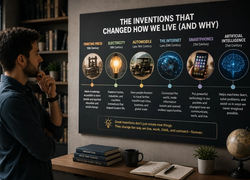
The Inventions That Changed How We Live (And Why)
Karina Leon|