

How to Build Habits That Actually Last
J
By Jessica Stuart on July 2, 2026
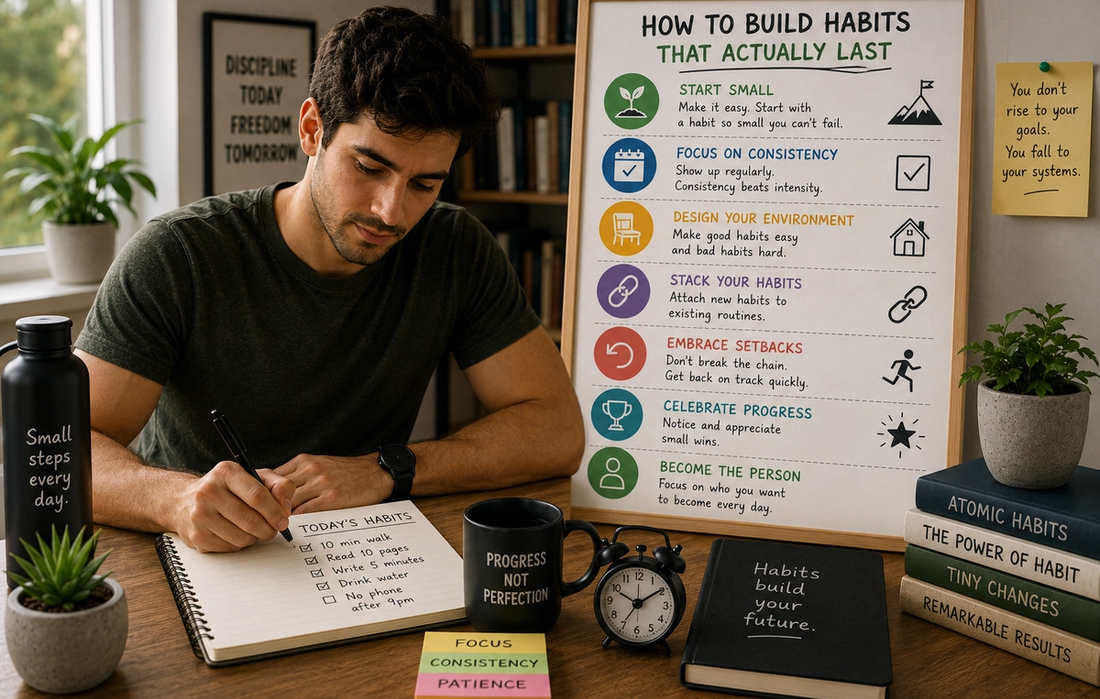
Most people don’t struggle because they lack goals. They know they want to exercise more, spend less time on their phones, save money, read more books, or eat healthier. The real challenge is turning those good intentions into routines that stick. It’s easy to feel motivated for a few days or even a couple of weeks, but maintaining that momentum over months is where many people begin to struggle.
The good news is that lasting habits aren’t built through endless willpower or perfect self-discipline. In fact, research in psychology suggests that successful habits are usually the result of small, consistent actions repeated over time. Rather than relying on motivation, they rely on systems that make the desired behavior easier to repeat until it becomes part of everyday life.
Building habits that last isn’t about changing your entire life overnight. It’s about creating routines that are realistic enough to continue, even on days when motivation is low.
Start smaller than feels necessary
One of the biggest mistakes people make is trying to change too much at once. Inspired by a new year, a motivational video, or an exciting goal, they decide to wake up early, exercise every day, completely change their diet, read an hour every evening, and meditate before bed.
The enthusiasm is genuine, but the plan is rarely sustainable.
Instead, start with a version of the habit that feels almost too easy. If your goal is to exercise regularly, begin with a ten-minute walk. If you want to read more, commit to one chapter—or even one page—a day. If you’re trying to build a writing habit, promise yourself you’ll write for just five minutes.
Small habits remove the pressure that often leads people to give up. Once the routine exists, expanding it becomes much easier.
Focus on consistency instead of intensity
People often believe that success comes from doing more. In reality, doing something consistently usually matters far more than doing it perfectly.
A twenty-minute workout three times a week will almost always produce better long-term results than an intense three-hour session followed by weeks of inactivity. The same principle applies to learning a language, practicing an instrument, writing, or saving money.
Every time you repeat a habit, you strengthen it. Over time, those repetitions become automatic, requiring less effort and less decision-making.
Instead of asking yourself how much you can accomplish today, ask yourself whether you’re building a routine you’ll still be able to follow six months from now.
Make your environment work for you
Willpower is helpful, but your environment often has an even greater influence on your behavior.
If healthy food is already prepared, you’re more likely to eat it. If your workout clothes are laid out the night before, exercising becomes easier. If a book is sitting on your bedside table, you’re more likely to read before going to sleep. On the other hand, if distractions are always within reach, resisting them requires constant effort.
The easiest habits are often the ones that require the fewest decisions.
Look for ways to remove friction from good habits while adding a little friction to the habits you’d like to reduce. Keeping your phone in another room while working or removing distracting apps from your home screen may seem like small changes, but they can have a surprisingly large impact over time.
Connect new habits to existing routines
One of the most effective strategies for building habits is attaching them to something you already do every day. This approach, often called habit stacking, works because your brain already recognizes the existing routine.
For example, you might decide to stretch for five minutes immediately after brushing your teeth, review your to-do list while drinking your morning coffee, or read a few pages before turning off your bedside lamp each night.
The existing habit becomes a natural reminder for the new one, making it less likely that you’ll forget or postpone it.
Rather than trying to create an entirely new routine from scratch, you’re simply adding one small action to a pattern that’s already established.
Accept that setbacks are part of the process
One of the biggest reasons people abandon habits is because they believe one missed day means they’ve failed.
In reality, setbacks are completely normal.
Everyone gets busy, travels, becomes ill, or has days when life doesn’t go according to plan. Missing one workout or skipping one reading session won’t undo weeks of progress.
The important part is returning to the habit as quickly as possible.
Many psychologists recommend following a simple principle: never miss twice. If you skip today’s walk, go tomorrow. If you forget to study one evening, pick it up again the next day.
Consistency isn’t about perfection—it’s about coming back after interruptions.
Celebrate progress, not just results
Many people wait until they’ve achieved a major goal before allowing themselves to feel successful. They celebrate losing twenty kilograms but ignore the dozens of healthy meals that made it possible. They celebrate finishing a book but overlook every day they sat down to write.
The truth is that progress deserves recognition too.
Every time you repeat a positive habit, you’re reinforcing the identity of someone who values that behavior. Those small victories create motivation because they provide evidence that you’re moving in the right direction.
Success isn’t only measured by the final outcome. It’s built through hundreds of small actions that often go unnoticed.
Think about the person you’re becoming
Perhaps the most powerful way to build lasting habits is to focus less on the goal itself and more on the identity you’re creating.
Instead of saying, “I want to run a marathon,” think, “I want to become someone who exercises regularly.” Instead of saying, “I want to write a book,” think, “I’m becoming someone who writes every day.”
This shift changes your mindset. You’re no longer chasing a single achievement—you’re reinforcing the kind of person you want to be through your daily actions.
Every time you complete the habit, you strengthen that identity a little more.
Small actions shape remarkable lives
The habits that have the biggest impact on our lives rarely feel dramatic in the moment. Reading a few pages, taking a short walk, preparing tomorrow’s lunch, or spending ten minutes learning a new skill may seem insignificant on any single day. Yet over weeks, months, and years, those small actions compound into meaningful change.
Building habits that actually last isn’t about finding endless motivation or becoming a different person overnight. It’s about creating systems that make good choices easier, accepting that setbacks will happen, and showing up consistently even when progress feels slow.
In the end, lasting change isn’t built through one extraordinary effort. It’s built through ordinary actions repeated often enough that they become part of who you are. And that’s exactly how habits turn into a better life.

AI

How AI Actually Works (No Math Required)

How to Spot AI-Generated Content Even When It’s Good

The Real Difference Between AI, Machine Learning, and Deep Learning

How to Prompt AI Like a Pro






Read More

Why the World Feels Faster Than Ever (And What to Do About It)
Astrid Jensen|
Why Some People Notice More Than Others
Joel Anderson|
Why the Slow Things Are Quietly Winning
Brett Crane|
How to Spend Less Without Feeling Deprived
Joel Anderson|

How to Spend a Sunday Like You Mean It
Brett Crane|

The Inventions That Changed How We Live (And Why)
Karina Leon|