

The Difference Between Discipline and Motivation
J
By Joel Anderson on July 2, 2026
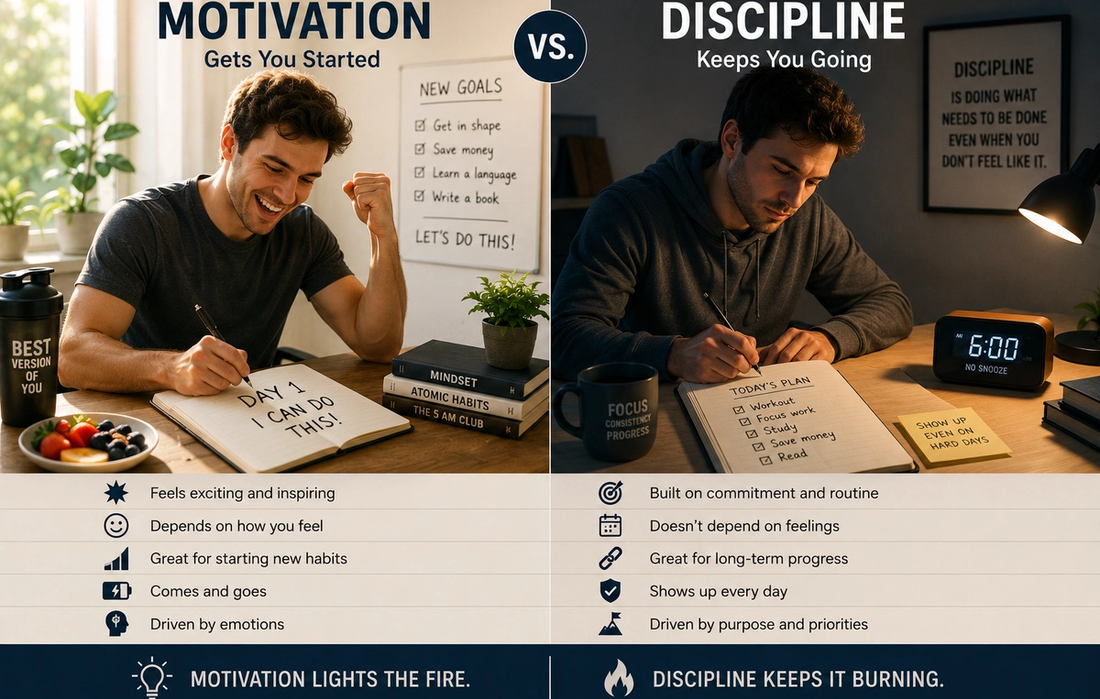
Most people have experienced the excitement that comes with setting a new goal. You decide you’re finally going to start exercising, save more money, learn a language, or write the book you’ve always talked about. For a few days, everything feels easy. You’re energized, focused, and eager to make progress.
Then life happens.
Work becomes busy, your schedule changes, or you simply wake up one morning without the same enthusiasm. Suddenly, the habit that felt effortless a week ago becomes difficult to maintain. This is where many people begin to question themselves, believing they’ve lost motivation or simply don’t have enough willpower.
The truth is that motivation and discipline are not the same thing. Understanding the difference between them can completely change the way you approach personal growth, productivity, and long-term success.
Motivation gets you started
Motivation is the emotional drive that makes you want to take action.
It often appears after watching an inspiring video, reading a great book, hearing an encouraging story, or imagining the benefits of achieving a goal. Motivation feels exciting because it creates momentum quickly. Suddenly, waking up early seems easy, healthy eating feels appealing, and your new project feels full of possibilities.
There’s nothing wrong with relying on motivation in the beginning. In fact, many positive changes start with a burst of enthusiasm.
The challenge is that motivation naturally comes and goes. It depends on factors such as your mood, energy levels, environment, stress, and even how well you slept the night before. If your progress depends entirely on feeling motivated, you’ll probably find yourself making great progress some weeks and very little during others.
Motivation is powerful—but it’s temporary.
Discipline keeps you moving
Discipline is different.
Instead of depending on how you feel, discipline focuses on what you’ve decided to do. It’s the ability to follow through even when the excitement has faded or the task feels inconvenient.
Someone with discipline doesn’t necessarily enjoy every workout, every study session, or every early morning. They simply understand that consistency matters more than emotion.
This doesn’t mean disciplined people never struggle. They experience the same distractions and moments of doubt as everyone else. The difference is that they don’t wait for the perfect mood before taking action.
They’ve learned that progress often comes from showing up, even on ordinary days.
Why motivation fades
Many people become frustrated when they notice their motivation disappearing after a few weeks. They assume something is wrong with them.
In reality, this is completely normal.
Our brains are naturally attracted to novelty. Starting something new feels exciting because it brings fresh possibilities and immediate emotional rewards. As the routine becomes familiar, that excitement gradually fades.
This happens whether you’re learning a language, training for a marathon, or saving money.
Successful people don’t avoid this stage—they expect it.
Instead of relying on motivation forever, they build systems and routines that allow them to continue even when the excitement disappears.
Habits make discipline easier
One reason disciplined people appear so consistent is that many of their behaviors have become habits.
When something becomes part of your routine, it requires much less mental effort. You no longer debate whether you’ll go for a run or read before bed because it’s simply what you do.
Habits reduce the number of decisions you have to make each day, freeing up mental energy for more important tasks.
This is why many experts recommend focusing on building habits rather than constantly searching for motivation.
The more automatic a behavior becomes, the less discipline it actually requires.
Make discipline easier, not harder
Discipline isn’t about making life difficult.
In fact, one of the smartest ways to become more disciplined is to remove unnecessary obstacles.
If you want to exercise, prepare your workout clothes the night before.
If you want to read more, keep a book on your bedside table instead of your phone.
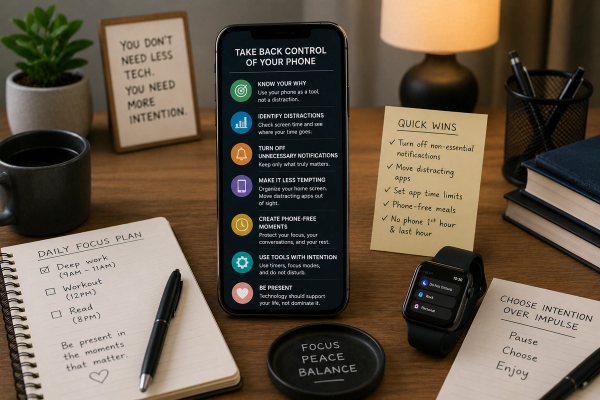
If you want to spend less time on social media, move distracting apps off your home screen or turn off unnecessary notifications.
Your environment plays a huge role in your behavior. Small changes can make good habits easier and unhealthy habits less tempting.
Discipline becomes much more sustainable when your surroundings support your goals.
Don’t wait for the perfect day
One of the biggest mistakes people make is believing they need the perfect conditions before taking action.
They’ll start exercising when work becomes less stressful. They’ll begin writing when they have more free time. They’ll focus on healthy eating after the holidays.
Unfortunately, perfect conditions rarely arrive.
Life will always include busy weeks, unexpected setbacks, and days when you don’t feel particularly motivated.
Discipline means learning to make progress anyway.
Even a small action—a short walk, one page of reading, or ten minutes of focused work—keeps the habit alive and makes it easier to continue tomorrow.
The most successful people rely on both
It’s tempting to think that successful people are always highly disciplined or permanently motivated.
The reality is much more balanced.
They enjoy motivation when it appears because it makes progress easier and more enjoyable. But they don’t depend on it.
When motivation fades, their routines, habits, and discipline keep them moving forward until motivation naturally returns.
In other words, motivation may light the fire, but discipline keeps it burning.
Long-term success is built on consistency
Whether your goal is improving your health, advancing your career, learning a new skill, or managing your finances, lasting progress rarely comes from occasional bursts of effort.
It comes from consistently doing the right things, even when they feel ordinary.
Motivation is an excellent starting point. It inspires change and gives you the confidence to begin. But discipline is what carries you through the days when the excitement has disappeared and the work still needs to be done.
The most important thing to remember is that discipline isn’t something you’re born with. It’s a skill that grows stronger every time you keep a promise to yourself.
And over time, those small acts of consistency become far more powerful than even the strongest burst of motivation.

AI

How AI Actually Works (No Math Required)

How to Spot AI-Generated Content Even When It’s Good

The Real Difference Between AI, Machine Learning, and Deep Learning

How to Prompt AI Like a Pro






Read More

Why the World Feels Faster Than Ever (And What to Do About It)
Astrid Jensen|
Why Some People Notice More Than Others
Joel Anderson|
Why the Slow Things Are Quietly Winning
Brett Crane|
How to Spend Less Without Feeling Deprived
Joel Anderson|
How to Spend a Sunday Like You Mean It
Brett Crane|

The Inventions That Changed How We Live (And Why)
Karina Leon|