

How to Spend Less Without Feeling Deprived
J
By Joel Anderson on July 2, 2026
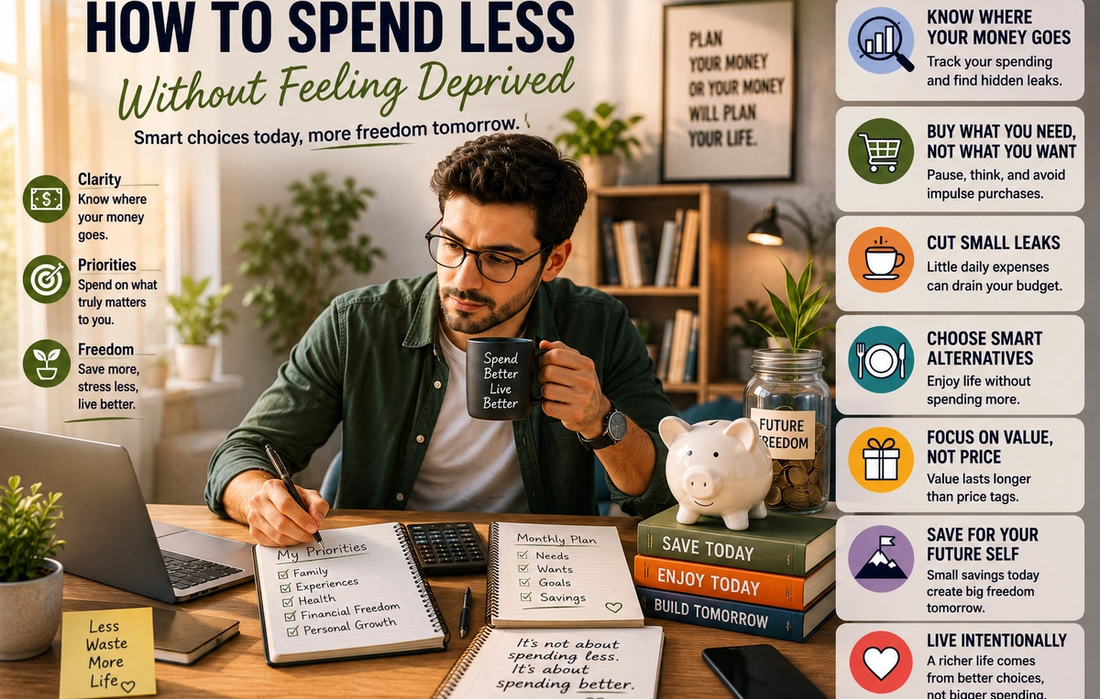
For many people, the idea of spending less immediately brings to mind strict budgets, giving up everything enjoyable, or constantly saying no to the things they love. It’s easy to see why budgeting often gets associated with sacrifice. After all, if cutting expenses means eliminating every coffee, dinner out, or weekend trip, it doesn’t sound like a lifestyle most people would want to maintain.
The problem with this approach is that it rarely lasts. When saving money feels like a punishment, it’s only a matter of time before frustration takes over and old spending habits return.
The good news is that spending less doesn’t have to mean enjoying life less. In fact, the most successful savers usually don’t focus on deprivation at all. Instead, they become more intentional about where their money goes, choosing to spend generously on the things they truly value while cutting back on the expenses that add little happiness.
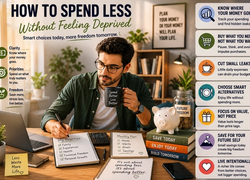
Know where your money is actually going
Before changing your spending habits, it’s worth understanding your current ones.
Many people are surprised when they review a few months of bank or credit card statements. Small purchases that seemed insignificant at the time—takeaway coffees, food deliveries, unused subscriptions, impulse online shopping, or convenience purchases—can quietly add up to a substantial amount over the course of a year.
This isn’t about judging yourself or feeling guilty. It’s about gaining clarity. Once you know where your money is going, you can decide whether those expenses genuinely reflect your priorities.
A budget isn’t meant to restrict your freedom. It’s simply a tool that helps you spend with greater intention.
Spend more on what matters and less on what doesn’t
One of the biggest misconceptions about saving money is that every expense should be treated the same.
In reality, not all spending provides equal value.
Perhaps travelling is one of your greatest joys, while designer clothes don’t interest you. Maybe you love buying books but rarely watch television, making multiple streaming subscriptions unnecessary. Someone else may happily cook at home throughout the week because they genuinely enjoy dining out with friends on weekends.
The goal isn’t to spend as little as possible. It’s to spend in ways that bring the greatest satisfaction.
When your spending reflects your personal values rather than habit or impulse, cutting unnecessary expenses feels much less like a sacrifice.
Pause before making impulse purchases
Modern shopping has never been easier.
With just a few taps on your phone, almost anything can arrive at your door within days—or sometimes even hours. While this convenience is remarkable, it also makes impulse buying far more tempting than it used to be.
A simple strategy is to introduce a short waiting period before making non-essential purchases. Whether that’s 24 hours for smaller items or a week for larger ones, giving yourself time to think often separates genuine needs from temporary wants.
More often than not, you’ll discover that the excitement fades, and the purchase no longer feels as necessary as it did in the moment.
Don’t confuse convenience with necessity
Convenience has become one of the biggest drivers of modern spending.
Ordering takeaway instead of cooking, paying for express delivery, buying bottled water instead of carrying a reusable bottle, or replacing items instead of repairing them may each seem like small decisions. Individually, they rarely make a significant difference. Repeated every week, however, they can have a noticeable impact on your finances.
This doesn’t mean convenience is always a bad choice. Sometimes paying extra genuinely saves valuable time or reduces stress.
The important question is whether you’re choosing convenience intentionally or simply out of habit.
Find affordable alternatives—not complete restrictions
Trying to eliminate every enjoyable expense often leads to frustration.
Instead of giving things up entirely, look for alternatives that cost less while still providing similar enjoyment. You might invite friends over for dinner instead of meeting at an expensive restaurant, borrow books from the library before buying them, explore free local events, or prepare coffee at home during the week and save café visits for special occasions.
These changes don’t remove enjoyment from your life. They simply reduce the cost of experiences you already value.
Sustainable financial habits are usually built through moderation rather than extremes.
Avoid comparing your spending to others
One of the fastest ways to become dissatisfied with your finances is by constantly comparing yourself to other people.
Social media often creates the impression that everyone else is travelling constantly, buying new cars, renovating their homes, or enjoying expensive lifestyles. What those images rarely show are personal priorities, financial circumstances, or the sacrifices made behind the scenes.
Making financial decisions based on someone else’s lifestyle usually leads to unnecessary spending and long-term frustration.
Your financial goals should reflect your own values—not someone else’s highlight reel.
Focus on long-term freedom
Saving money isn’t simply about having a larger number in your bank account.
Every euro or dollar you don’t spend unnecessarily creates future opportunities. It may contribute to an emergency fund, a dream holiday, a home deposit, education, starting a business, or simply greater peace of mind during uncertain times.
Thinking about what your savings make possible often feels much more motivating than focusing only on what you’re giving up.
Financial freedom isn’t built through one dramatic decision. It’s built through hundreds of thoughtful choices made consistently over time.
Spend intentionally, not automatically
Many purchases happen without much thought because they’ve become routines.
Subscription renewals, daily convenience purchases, or impulse online shopping can quietly become part of everyday life. Occasionally pausing to ask yourself whether something still deserves your money helps prevent unnecessary spending from becoming automatic.
A useful question to ask before making a purchase is: Will this improve my life in a meaningful way, or am I simply buying it because it’s easy?
That small moment of reflection often leads to better financial decisions without making life feel restrictive.
A richer life isn’t always the one that costs more
Learning to spend less isn’t about denying yourself life’s pleasures. It’s about understanding what genuinely adds value and letting go of expenses that don’t.
When your money is directed toward the people, experiences, and goals that matter most, saving becomes much easier because it no longer feels like constant sacrifice. Instead of asking, “How can I spend less?” you begin asking, “How can I spend better?”
In the end, financial wellbeing isn’t determined by how little you spend or how much you earn. It’s shaped by how intentionally you use the resources you have. And often, the people who feel richest aren’t the ones buying the most—they’re the ones who know exactly what is worth paying for and what isn’t.

AI

How AI Actually Works (No Math Required)

How to Spot AI-Generated Content Even When It’s Good

The Real Difference Between AI, Machine Learning, and Deep Learning

How to Prompt AI Like a Pro






Read More

Why the World Feels Faster Than Ever (And What to Do About It)
Astrid Jensen|
Why Some People Notice More Than Others
Joel Anderson|

Why the Slow Things Are Quietly Winning
Brett Crane|
How to Spend Less Without Feeling Deprived
Joel Anderson|
How to Spend a Sunday Like You Mean It
Brett Crane|

The Inventions That Changed How We Live (And Why)
Karina Leon|