
How to Become a Better Decision Maker
C
By Celine Flynn on July 2, 2026

Every day, we make hundreds of decisions. Most are small and almost automatic—what to wear, what to eat for lunch, or which route to take to work. Others carry much greater weight, such as accepting a new job, moving to a different city, making a major purchase, or deciding how to spend our time and money.
It’s easy to assume that good decision-makers simply have better instincts than everyone else. In reality, making better decisions is rarely about luck or intuition alone. It’s a skill that can be developed through practice, self-awareness, and a willingness to think more clearly.
The goal isn’t to make perfect decisions every time. That’s impossible. Instead, it’s about making thoughtful choices based on the information available while accepting that uncertainty will always be part of life.
Separate emotions from facts
Emotions play an important role in decision-making. They can warn us about genuine risks, highlight what matters most to us, and help us understand our values. At the same time, strong emotions can sometimes cloud our judgment, especially when we’re feeling stressed, excited, angry, or afraid.
This doesn’t mean emotions should be ignored. Instead, it’s helpful to recognize when they’re influencing your thinking.
If you’re making an important decision, ask yourself what you know for certain and what you’re simply assuming. Writing down the facts separately from your feelings can often provide surprising clarity. Once you’ve acknowledged both, it’s much easier to make a balanced decision instead of reacting impulsively.
Focus on what you can control
Many decisions become overwhelming because we spend too much time worrying about outcomes we can’t predict.
For example, you can prepare thoroughly for a job interview, but you can’t control the employer’s final decision. You can start a business with a solid plan, but you can’t guarantee market conditions. You can invest wisely, but you can’t predict every movement in the economy.
Good decision-makers concentrate on the quality of their choices rather than trying to control every possible outcome.
When you focus on what you can influence—your preparation, your effort, and your reasoning—you reduce unnecessary stress and make more confident decisions.
Avoid confusing speed with confidence
Modern life often encourages quick decisions. We respond to messages immediately, make purchases with one click, and feel pressure to have instant answers.
While some decisions benefit from speed, many important ones deserve time.
Giving yourself space to think doesn’t mean you’re indecisive. It means you’re allowing yourself to consider different perspectives, identify potential risks, and avoid emotional reactions.
A good habit is to pause before making major decisions whenever possible. Sleeping on an important choice or revisiting it the following day often brings greater clarity than deciding in the heat of the moment.
Don’t let perfection hold you back
Some people struggle to make decisions because they’re searching for the perfect option.
The problem is that perfect choices rarely exist.
Every decision involves trade-offs. Accepting a new job might mean leaving familiar colleagues behind. Buying a home may reduce your financial flexibility. Starting a business requires giving up some stability in exchange for opportunity.
Instead of asking, “What’s the perfect choice?” ask, “Which option best matches my priorities right now?”
Recognizing that every decision comes with both advantages and disadvantages makes it easier to move forward instead of remaining stuck.
Learn to recognize common thinking traps
Our brains rely on shortcuts to process information quickly, but those shortcuts can sometimes lead to poor decisions.
For example, we often give too much weight to recent events, assume that our first impression is always correct, or continue investing time and money into something simply because we’ve already committed to it.
Being aware of these mental habits doesn’t eliminate them completely, but it helps you question your assumptions.
When facing an important decision, ask yourself whether you’re basing it on evidence or simply following your initial instinct. Sometimes a few extra minutes of reflection can prevent costly mistakes.
Seek advice—but make your own choice
Talking to trusted friends, colleagues, or mentors can provide valuable perspectives, especially when you’re facing unfamiliar situations.
Other people may notice risks or opportunities that you hadn’t considered. They may also ask questions that help clarify your own thinking.
However, advice should inform your decision—not replace it.
No one else lives with the consequences of your choices in the same way you do. Listening to different opinions is valuable, but ultimately the decision should align with your own goals, values, and circumstances.
Accept that not every decision will be perfect
One of the biggest obstacles to confident decision-making is the fear of making mistakes.
The truth is that even the best decision-makers occasionally make choices that don’t work out as planned. That’s simply part of life.
A decision can be thoughtful and well-reasoned while still leading to an unexpected outcome because circumstances change or new information becomes available.
Rather than judging every decision solely by its result, evaluate whether you made the best choice with the information you had at the time.
That mindset encourages learning instead of regret.
Better decisions come from better habits
Making better decisions isn’t about becoming fearless or always knowing the right answer. It’s about developing habits that improve your thinking over time.
Taking time to reflect, separating facts from emotions, considering long-term consequences, asking good questions, and accepting uncertainty all contribute to stronger decision-making.
Like any skill, the more you practice, the more natural it becomes.
Good decisions build a better life
The quality of our lives is shaped not by one dramatic decision but by the thousands of small choices we make along the way. The decision to save a little money each month, spend time with loved ones, continue learning, take care of our health, or pursue meaningful work gradually creates the future we experience.
That’s why becoming a better decision-maker isn’t about eliminating uncertainty or guaranteeing success. It’s about approaching life’s choices with curiosity, patience, and confidence rather than fear.
You won’t always make the perfect decision—and you don’t need to.
What matters is making thoughtful choices, learning from experience, and trusting yourself to adapt when life takes an unexpected turn. Over time, those habits become one of the greatest advantages you can develop, helping you navigate both everyday challenges and life’s biggest opportunities with greater clarity and confidence.

AI
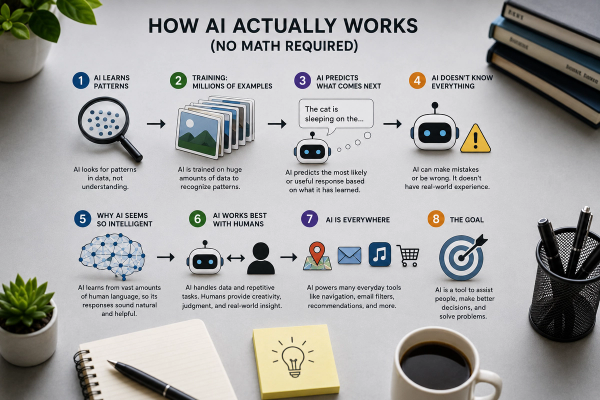
How AI Actually Works (No Math Required)

How to Spot AI-Generated Content Even When It’s Good

The Real Difference Between AI, Machine Learning, and Deep Learning

How to Prompt AI Like a Pro





Read More

Why the World Feels Faster Than Ever (And What to Do About It)
Astrid Jensen|
Why Some People Notice More Than Others
Joel Anderson|

Why the Slow Things Are Quietly Winning
Brett Crane|
How to Spend Less Without Feeling Deprived
Joel Anderson|

How to Spend a Sunday Like You Mean It
Brett Crane|

The Inventions That Changed How We Live (And Why)
Karina Leon|