

The Art of Saying No (Without Feeling Guilty)
J
By Jessica Stuart on July 2, 2026
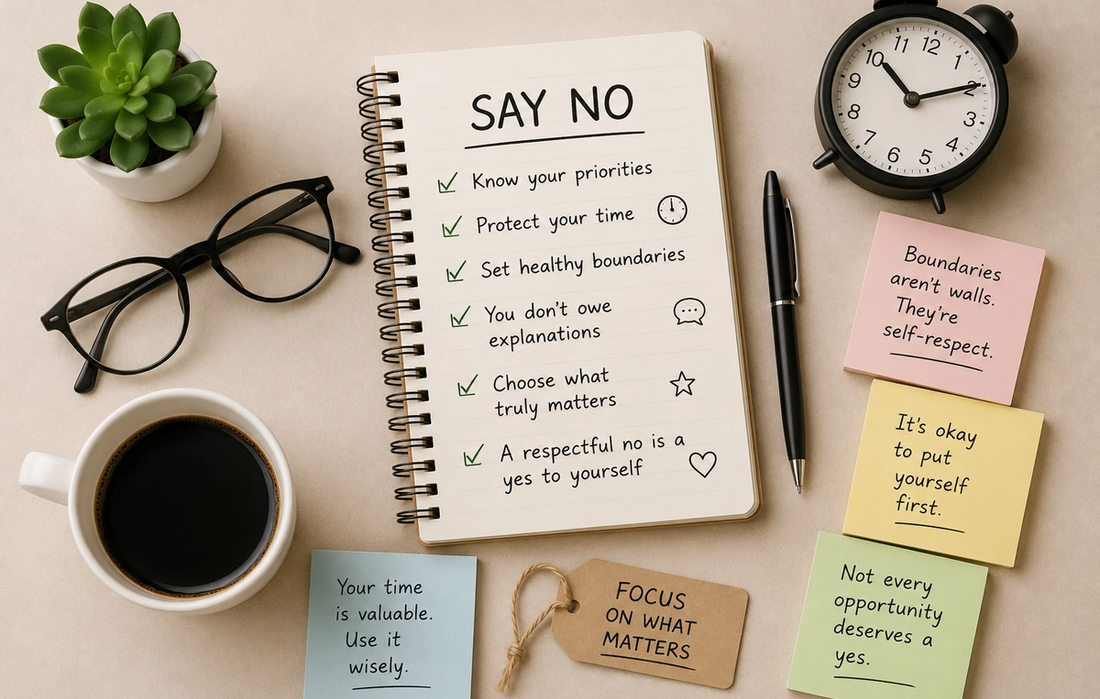
For many people, saying “no” is far more difficult than it should be. We agree to extra work because we don’t want to disappoint our colleagues. We accept invitations when we’re already exhausted, volunteer for responsibilities we don’t have time for, and promise to help even when our schedules are already full. In the moment, saying yes often feels easier than risking awkwardness or letting someone down.
The problem is that every yes comes with a cost.
Time, energy, and attention are limited resources. When we commit to things that don’t align with our priorities, we often end up feeling overwhelmed, stressed, and frustrated—not because we’ve done anything wrong, but because we’ve tried to do too much.
Learning to say no isn’t about becoming selfish or unkind. It’s about recognizing your limits and making thoughtful decisions about where your time and energy are best spent.
Why saying no feels so difficult
Most people aren’t afraid of the word “no” itself. They’re afraid of what it might mean.
We worry that people will think we’re unhelpful, unfriendly, or unreliable. We fear disappointing family members, upsetting colleagues, or missing opportunities. Sometimes we simply want to avoid uncomfortable conversations.
These concerns are understandable because humans naturally value connection and belonging. We like being seen as dependable and supportive.
However, constantly saying yes to protect other people’s feelings often comes at the expense of our own wellbeing. Over time, that habit can lead to stress, resentment, and burnout.
Recognizing why saying no feels uncomfortable is the first step toward becoming more confident about it.
Every yes is also a no
Whenever you agree to something, you’re automatically choosing not to do something else.
Accepting another meeting may mean having less time to finish an important project. Agreeing to weekend plans might reduce the time available to rest or spend with family. Taking on another responsibility could leave less energy for your own goals.
Thinking this way changes the question entirely.
Instead of asking, “Can I fit this in?” ask yourself, “What am I giving up if I say yes?”
This simple shift encourages more intentional decisions because it reminds you that every commitment has an opportunity cost.
Boundaries protect your priorities
Many people think boundaries exist to keep others away. In reality, healthy boundaries exist to protect the things that matter most.
If spending time with your family, maintaining your health, advancing your career, or pursuing personal projects is important to you, those priorities require time and attention. Without boundaries, it’s easy for less important commitments to gradually fill every available hour.
Saying no isn’t rejecting people. It’s protecting the commitments you’ve already made—to yourself and to the parts of your life that matter most.
People who establish healthy boundaries are often able to give more fully because they aren’t constantly running on empty.
You don’t need a long explanation
One reason people avoid saying no is because they believe they need a detailed justification.
In reality, a respectful and honest response is usually enough.
You can politely explain that your schedule is full, that you’re focusing on existing commitments, or that you’re simply unable to take on something new right now. Most people appreciate clear communication more than lengthy explanations or excuses.
In fact, offering too many reasons sometimes invites unnecessary negotiation.
Being direct, kind, and respectful often creates the healthiest conversations.
Not every opportunity is the right opportunity
Opportunities can be exciting, especially when they promise personal or professional growth.
However, saying yes to every opportunity isn’t always the smartest decision.
Sometimes an excellent opportunity arrives at the wrong time. Accepting it may leave you overwhelmed or prevent you from giving your best to responsibilities you’ve already committed to.
Successful people aren’t defined only by what they choose to pursue. They’re also defined by what they intentionally decline.
Knowing when to say no allows you to say a much stronger yes to the opportunities that truly align with your goals.
Practice saying no with kindness
Being assertive doesn’t require being cold or confrontational.
You can decline a request while still expressing appreciation, gratitude, or encouragement.
For example, thanking someone for thinking of you before politely explaining that you’re unavailable acknowledges their request without creating unnecessary tension.
Most people understand that everyone has limits. In fact, many respect clear boundaries because they demonstrate honesty and self-awareness.
Kindness and firmness can exist at the same time.
Let go of unnecessary guilt
It’s natural to feel a little uncomfortable the first few times you begin setting boundaries.
That discomfort doesn’t necessarily mean you’ve made the wrong decision.
Many people confuse guilt with responsibility. Yet declining a request because you’re protecting your health, your family, or your existing commitments isn’t something you need to apologize for.
You aren’t responsible for solving every problem, attending every event, or accepting every invitation.
Allowing yourself to say no occasionally creates space to be fully present when you genuinely choose to say yes.
Saying no creates room for what matters
One of the biggest benefits of saying no is that it creates space.
Space to focus on meaningful work. Space to rest without feeling guilty. Space to spend time with the people you care about. Space to pursue long-term goals that often get pushed aside by constant busyness.
Ironically, learning to decline the wrong commitments often leads to stronger relationships and better work because you’re no longer spreading yourself too thin.
Quality almost always benefits from having fewer competing priorities.
A thoughtful no is often a respectful yes to yourself
Many of us spend years believing that kindness means always being available.
But genuine kindness includes treating yourself with the same respect you offer other people. It means recognizing that your time, energy, and attention are valuable resources that deserve to be protected.
Learning to say no isn’t about closing doors or avoiding responsibility. It’s about making conscious decisions instead of automatic ones. It’s choosing commitments because they align with your values rather than because you felt unable to decline.
In the end, every respectful “no” is also a meaningful “yes”—a yes to your priorities, your wellbeing, and the life you’re intentionally trying to build. And that’s something you should never feel guilty about.

AI

How AI Actually Works (No Math Required)

How to Spot AI-Generated Content Even When It’s Good

The Real Difference Between AI, Machine Learning, and Deep Learning

How to Prompt AI Like a Pro







Read More

Why the World Feels Faster Than Ever (And What to Do About It)
Astrid Jensen|
Why Some People Notice More Than Others
Joel Anderson|

Why the Slow Things Are Quietly Winning
Brett Crane|

How to Spend Less Without Feeling Deprived
Joel Anderson|

How to Spend a Sunday Like You Mean It
Brett Crane|

The Inventions That Changed How We Live (And Why)
Karina Leon|