
The Hidden Cost of Optimizing Everything
B
By Brett Crane on July 2, 2026
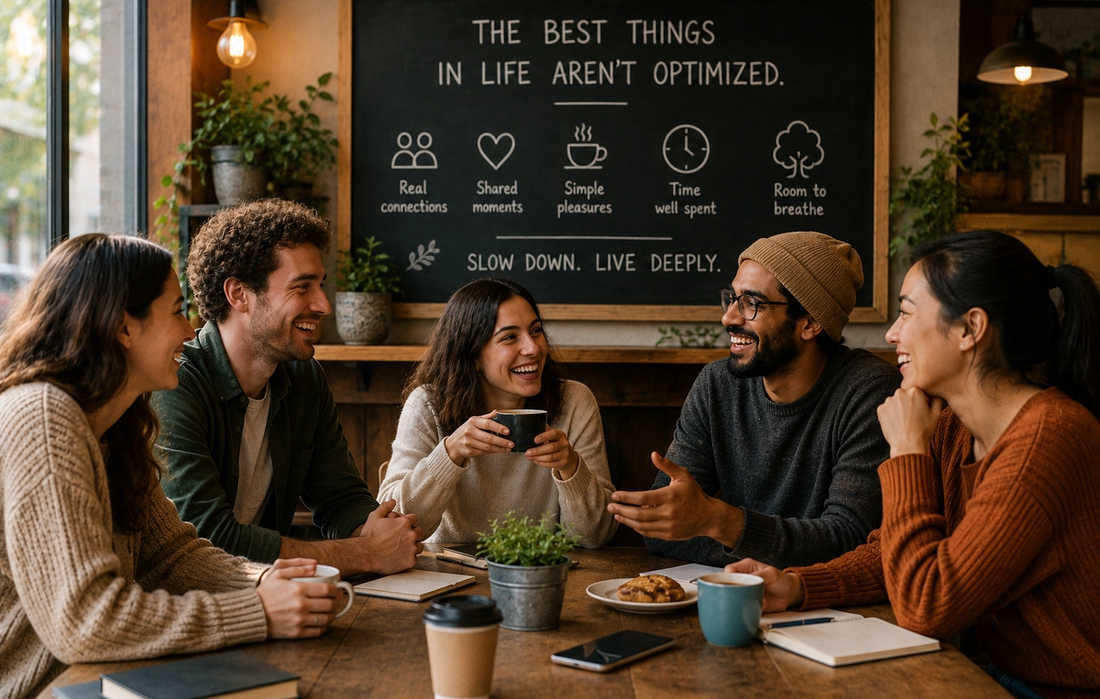
Modern life has become obsessed with optimization.
There are productivity systems to help us manage every hour of the day, apps that track our sleep, watches that monitor our heart rate, budgets that categorize every purchase, and algorithms that promise to make us more efficient at work, exercise, and even relaxation. Everywhere we look, we’re encouraged to improve, streamline, and maximize.
In many ways, this mindset has brought real benefits. Better planning can reduce stress, healthy habits can improve wellbeing, and technology can eliminate repetitive tasks. The problem begins when optimization stops being a tool and becomes a way of life.
When every moment has to be productive, every hobby has to lead somewhere, and every decision is measured by efficiency, we risk losing something just as valuable: the ability to simply live.
Productivity isn’t the same as a meaningful life
Being productive feels satisfying because it gives us a sense of progress.
Crossing tasks off a list, replying to emails, organizing schedules, and completing projects all create the feeling that we’ve used our time well. These habits are valuable, especially when they help us achieve important goals.
The challenge is that productivity can quietly become the goal itself.
When we begin judging every activity by whether it’s useful, it’s easy to overlook experiences that can’t be measured. Spending an afternoon talking with friends, wandering through a museum, reading a novel, or watching the sunset may not increase our income or improve our résumé, but those moments often enrich our lives in ways that no productivity app can measure.
Not everything worthwhile produces a measurable outcome.
Rest doesn’t always have to be earned
Many people feel guilty when they’re not accomplishing something.
Even weekends can become packed with self-improvement goals, side projects, exercise routines, and endless household tasks. Rest is treated as a reward that comes only after every item has been completed.
The reality is that the list is rarely finished.
Healthy rest isn’t wasted time. It’s an essential part of maintaining creativity, focus, emotional wellbeing, and physical health. Without regular recovery, even the most productive people eventually become exhausted.
Learning to rest without feeling guilty may be one of the healthiest forms of productivity there is.
Hobbies don’t need to become businesses
The internet has made it easier than ever to turn personal interests into sources of income.
Photography becomes a freelance career. Baking becomes an online shop. Reading becomes content creation. Fitness becomes coaching. Even journaling or traveling can feel like opportunities to build a personal brand.
While there’s nothing wrong with earning money from something you enjoy, not every passion needs to become a business.
Sometimes the greatest value of a hobby is that it exists purely for enjoyment. It allows you to create, learn, and relax without worrying about performance, metrics, or financial return.
Keeping some activities free from optimization protects the joy that made you love them in the first place.
Constant measurement changes our relationship with life
Technology makes it possible to measure almost everything.
We count our steps, track calories, monitor sleep quality, record productivity streaks, analyze spending habits, and measure screen time. These tools can certainly help us understand our behavior and make healthier choices.
However, constant measurement can also change our mindset.
Instead of asking whether an activity felt meaningful or enjoyable, we begin asking whether it improved a score or achieved a target. The experience itself becomes secondary to the data it produces.
Numbers are useful, but they rarely capture everything that matters.
Some of life’s most valuable experiences cannot be measured at all.
Efficiency isn’t always the best choice
Modern culture often treats efficiency as the highest goal.
We choose the fastest route, the quickest meal, the shortest meeting, and the most efficient workflow. In many situations, this makes perfect sense.
But some experiences become more meaningful precisely because they aren’t efficient.
Cooking dinner with family takes longer than ordering takeaway. Walking through a city reveals things you’ll never notice while driving. Reading a physical book is slower than watching a summary online. A handwritten letter requires more effort than sending a text message.
These slower experiences often create richer memories because they invite us to be present rather than rushing toward the next task.
Relationships don’t thrive on optimization
Human relationships don’t always fit neatly into efficient schedules.
Meaningful conversations often happen unexpectedly. Children don’t always need attention at convenient times. Friendships grow through unplanned moments, shared experiences, and conversations that don’t have a clear objective.
Trying to optimize every interaction can unintentionally remove the spontaneity that makes relationships meaningful.
Sometimes the most valuable moments are the ones that accomplish nothing except allowing people to enjoy each other’s company.
Connection doesn’t always follow a schedule.
Leave room for curiosity and surprise
One consequence of optimizing everything is that life can become overly predictable.
Every hour has a purpose, every activity serves a goal, and every decision is carefully planned.
While structure is helpful, leaving room for spontaneity can make life feel more interesting. Taking a different route home, exploring a new café, visiting a museum without an agenda, or saying yes to an unexpected invitation often leads to experiences that careful planning could never have created.
Some of life’s best moments happen precisely because they weren’t optimized.
Life isn’t a problem to solve
Optimization has its place.
It helps us manage our finances, improve our health, organize our work, and make better use of our time. The problem arises when we begin treating every part of life as something that needs to be maximized.
Not every moment needs to be productive. Not every hobby needs to generate income. Not every walk needs to burn calories, and not every conversation needs to accomplish something.
Sometimes the value of an experience lies simply in experiencing it.
The best life isn’t always the most efficient one
It’s easy to believe that if we could just become a little more organized, a little more productive, or a little more efficient, life would finally feel complete.
But a meaningful life isn’t built solely through optimization.
It’s built through relationships, curiosity, creativity, rest, laughter, ordinary moments, and experiences that can’t be measured by an app or summarized in a productivity report.
Efficiency can help us create more time, but it’s up to us to decide how that time is spent.
Perhaps the real goal isn’t to optimize every part of life. Perhaps it’s to optimize the things that matter while leaving enough space for the moments that remind us why life is worth living in the first place.
AI
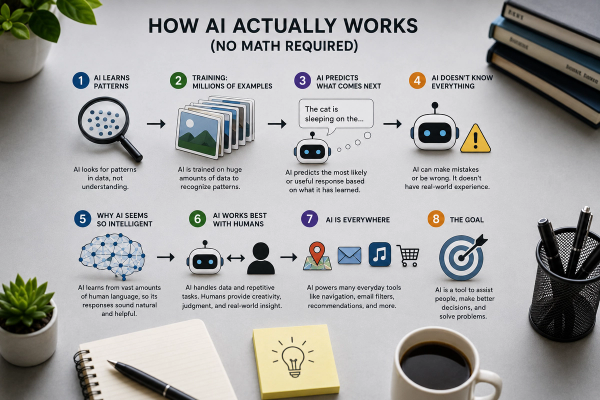
How AI Actually Works (No Math Required)

How to Spot AI-Generated Content Even When It’s Good

The Real Difference Between AI, Machine Learning, and Deep Learning

How to Prompt AI Like a Pro




Read More
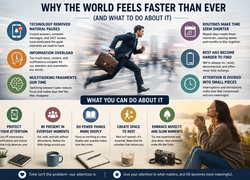
Why the World Feels Faster Than Ever (And What to Do About It)
Astrid Jensen|
Why Some People Notice More Than Others
Joel Anderson|
Why the Slow Things Are Quietly Winning
Brett Crane|
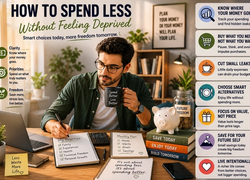
How to Spend Less Without Feeling Deprived
Joel Anderson|
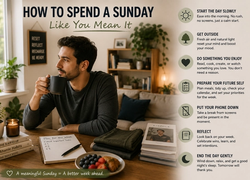
How to Spend a Sunday Like You Mean It
Brett Crane|
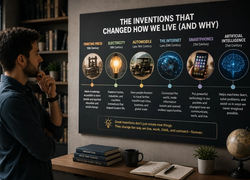
The Inventions That Changed How We Live (And Why)
Karina Leon|